Nick Stone @ ICAVS10

RaNT director talks development of his light-based ruler & non-invasively measuring depth of objects buried inside the body.

Prof. Nick Stone was at the University of Auckland, New Zealand this week, attending the 10th International Conference on Advanced Vibrational Spectroscopy (ICAVS10).

In an invited talk, he outlined RaNT’s progress on using spatially offset Raman spectroscopy (SORS) and transmission Raman spectroscopy (TRS), to non-invasively predict the depth of a single object buried inside biological tissue.

Depth information is encoded in relative changes observed in Raman band intensities, a direct result of the different distances that individual Raman scattered photons travel on their varied paths back to the surface of the tissue.

This research brings RaNT closer to a working technology able to pinpoint the exact location of a tumour in the body.

It was later published here in the Journal of Biophotonics.
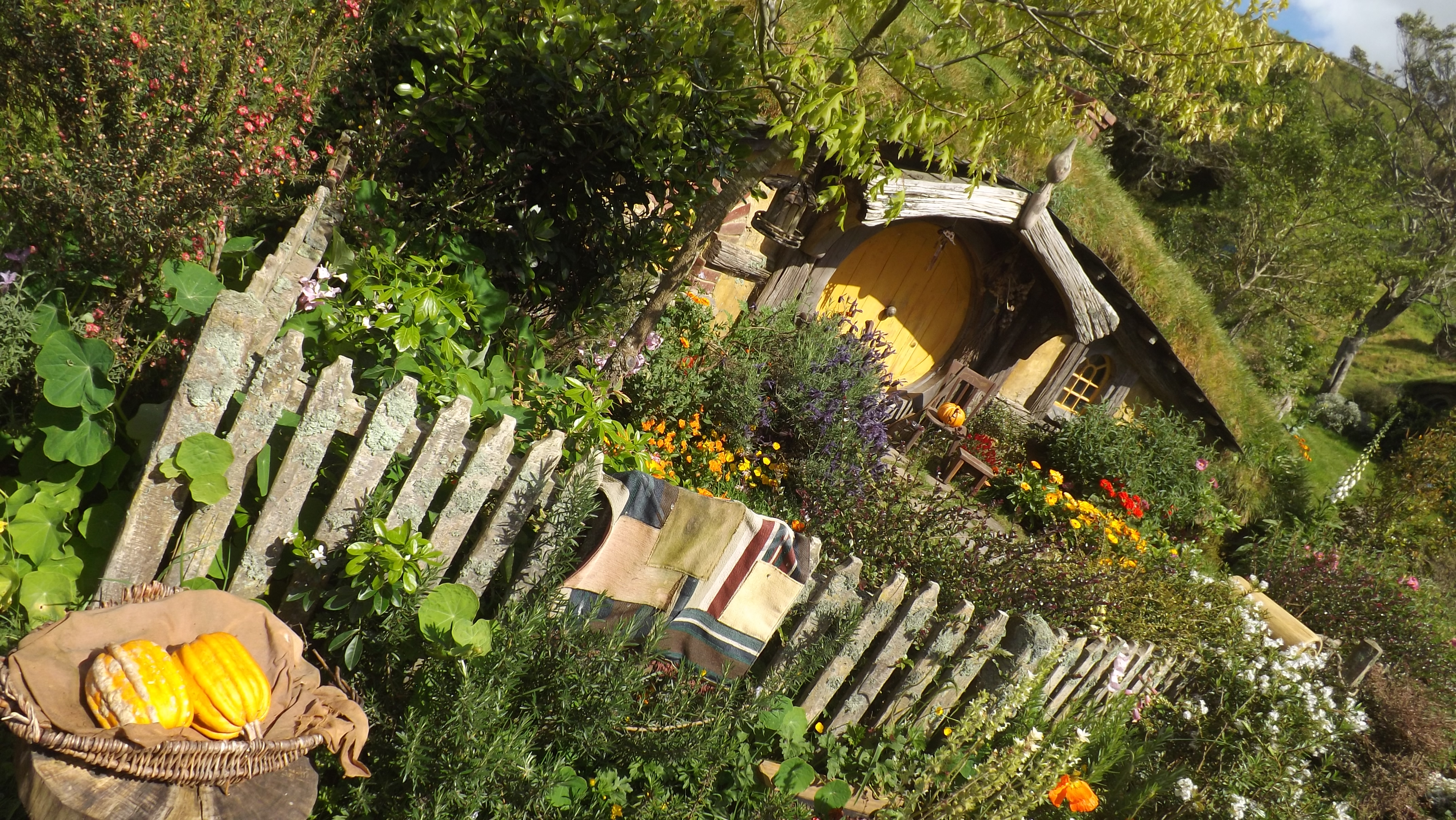
Nick joined the mid-conference excursion to the Hobbiton film set in Matamata, New Zealand. Photograph by: Ryan Edginton

Launched two whole seasons ahead by the trip to the southern hemisphere, Nick found himself enjoying a surprisingly balmy 2019 Middle Earth winter.

Our very own not-quite-so-Grey Wizard, even called in at Bag End in Hobbiton, on a brief side-quest away from all the science business!


Exploring Methodologies to Provide Inclusion Localisation Within Tissue Volumes using Transmission Raman, SORS and SESORS

Authors: Nick Stone, Sara Mosca, Priyanka Dey, Ben Gardner, Martha Vardaki & Pavel Matousek

Deep Raman methodologies have become powerful tools in the analysis of materials buried under or within turbid media. To date spatially offset approaches, whereby the illumination and collection zones are offset, have been the only way to provide an understanding of the depth of a particular material, without recourse to complex tomographic approaches with transmission Raman spectroscopy.

However, recent developments in the group have enabled us to use a number of methods to provide depth information from transmission data alone [1, 2].

Here we propose and demonstrate a new approach for the prediction of the depth of a single buried object within a turbid medium combining Spatially Offset Raman Spectroscopy (SORS) and Transmission Raman Spectroscopy (TRS) and relying on differential attenuation of individual Raman bands brought about by the spectral variation of matrix absorption (and scattering). The relative degree of the Raman band changes is directly related to the path length of Raman photons travelling through the medium thereby encoding the information on the depth of the object within the matrix [3].

References:

[1] Vardaki, H. Sheridan, N. Stone & P. Matousek, Applied Spectroscopy, 71, 8: 1849-1855 (2017)

[2] B. Gardner, N. Stone, & P. Matousek, Analytical Chemistry, 89, 18: 9730-9733 (2017)

[3] S. Mosca, P. Dey, T.A. Tabish, F. Palombo, N. Stone & P. Matousek, In-Preparation

Post updated on 8th October 2019 with J. Biophotonics link.